
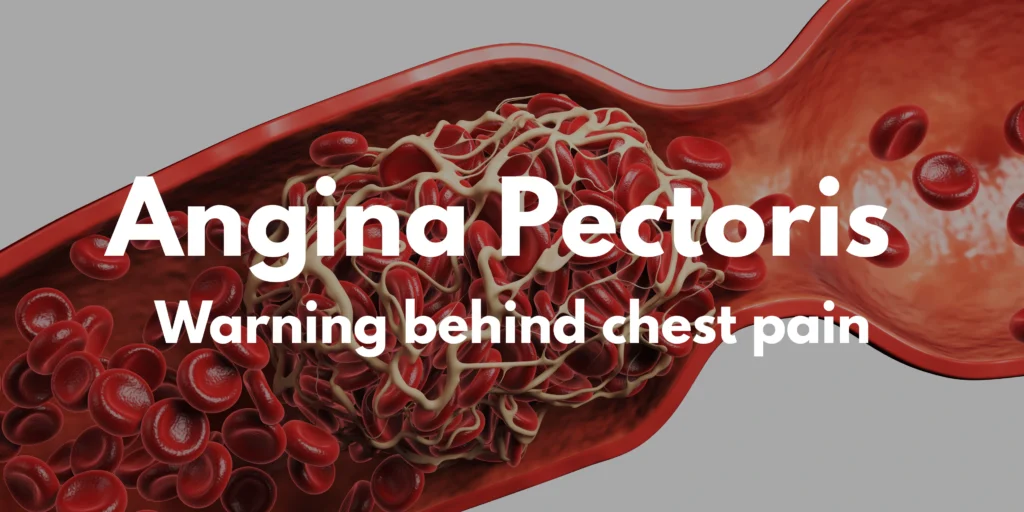
Chest pain can be an important warning sign of underlying heart conditions. Angina pectoris is a type of chest pain that occurs when the heart muscle does not receive enough oxygen-rich blood. It is commonly described as pressure, tightness, heaviness, or squeezing sensation in the chest. Angina is a symptom of underlying heart problems , most commonly due to coronary artery disease (CAD) and may signal an increased risk of heart attack. If you experience chest pain, it is important that you pay attention to the symptoms and seek medical advice.
Key takeaways
- Angina pectoris is chest pain caused by reduced blood flow to the heart, often triggered by physical activity or emotional stress. It may occur in various forms: these include stable angina, unstable angina, variant (Prinzmetal’s) angina, or microvascular angina.
- Common symptoms include chest pressure or tightness that may radiate to the arms, neck, jaw, or back, and may be associated with shortness of breath, fatigue, or nausea. Severe or persistent symptoms require urgent medical attention.
- With proper diagnosis, lifestyle modification, medications, and medical interventions, angina pectoris can be effectively managed and the risk of heart attack reduced.
What Is Angina Pectoris?
Angina pectoris develops when coronary arteries become narrowed or blocked, reducing the blood flow to heart muscle. This reduced supply of blood and oxygen causes chest discomfort, especially during physical activity or emotional stress when the heart has to work harder.
Different types of angina pectoris
- Stable Angina: Occurs in a predictable pattern, usually during physical exertion or stress. Symptoms typically improve with rest or medication.
- Unstable Angina: Occurs suddenly or may happen at rest. More severe and prolonged symptom is considered a medical emergency which requires immediate evaluation.
- Variant (Prinzmetal’s) Angina: a sudden, intense chest pain caused by temporary spasms of the coronary arteries, often occurring at rest during the night or early morning.
How does Angina Pectoris feel?
Symptoms of angina can vary depending on severity and individual health conditions. Common symptoms include:
- Sharp, squeezing, tightness, or heaviness in the chest
- Pain that radiates to the arms, shoulders, neck, jaw, or back
- Shortness of breath
- Fatigue or weakness
- Nausea or sweating
When to seek medical attention
Seek immediate medical care if you experience:
- Chest pain that is severe, persistent, or lasts more than a few minutes
- Chest pain that occurs at rest or worsens over time
- Pain that does not improve with prescribed medication
- Associated symptoms such as severe dizziness, fainting, or difficulty in breathing
Causes of Angina Pectoris
Angina is most commonly caused by reduced blood flow due to coronary artery disease. Contributing risk factors include:
- High cholesterol
- High blood pressure
- Smoking
- Diabetes
- Obesity
- Lack of physical activity
- Elevated mental stress level or emotional strain
How to diagnose Angina Pectoris
Angina pectoris is a clinical diagnosis made based on symptoms, medical history, and risk factors. Common clinical investigations include:
- Electrocardiogram (ECG): Detects abnormal heart rhythms or signs of significant inadequate myocardial blood flow.
- Stress testing: Evaluates heart function during physical exertion
- Echocardiogram: Assesses heart structure and blood flow
- Coronary angiography: Identifies blocked or narrowed arteries
- Blood tests: Helps detect or rule out heart muscle damage such as a heart attack
Treatment Options for Angina Pectoris
Treatment focuses on improving blood flow to the heart, relieving symptoms, and preventing heart attack.
- Lifestyle changes:
- Follow a heart-healthy diet
- Exercise regularly under medical guidance
- Manage stress effectively
- Stop smoking and limit alcohol consumption
- Control blood pressure, cholesterol, and blood sugar
- Medications:
- Nitroglycerin to relieve chest pain
- Beta-blockers or calcium channel blockers to reduce heart workload
- Statins to lower cholesterol
- Antiplatelet drugs (e.g., aspirin) to reduce clot risk
- Medical Procedures:
- Angioplasty with stenting: Opens blocked arteries and restores blood flow
- Coronary artery bypass grafting (CABG): Creates a new pathway for blood to reach the heart muscles
Angina pectoris is an important warning sign of heart disease. Early recognition, proper diagnosis, and ongoing management can significantly reduce the risk of serious complications such as heart attack.
Schedule a Heart Health Assessment at AHVC
The team at Asian Heart & Vascular Centre (AHVC) specialises in cardiovascular care. From baseline risk screening to advanced diagnostic imaging, our cardiologists provide personalised guidance to help you stay ahead of heart disease rather than simply respond to it.
FAQ
What is the difference between angina and a heart attack?
Angina is recurrent chest pain caused by reduced blood flow, while a heart attack occurs when blood flow is completely blocked, leading to permanent damage to heart muscle.
What is the best treatment for angina?
Treatment focuses on improving blood flow and may include lifestyle changes, medications, and medical procedures, depending on severity and underlying causes.
What is the most common trigger for angina?
Angina is more common in people over age 50, but it can occur earlier in individuals with risk factors such as smoking, diabetes, or high cholesterol.
At what age does angina start?
Angina is more common in people over age 50, but it can occur earlier in individuals with risk factors such as smoking, diabetes, or high cholesterol.
Can stress cause angina?
Yes. Emotional stress can increase heart rate and blood pressure, raising the heart’s oxygen demand and potentially triggering angina.
References
This article draws on the following sources
1. American Heart Association. Angina pectoris (chest pain). Dallas (TX): American Heart Association; n.d.
2. National Heart, Lung, and Blood Institute (NHLBI). Angina (chest pain). Bethesda (MD): U.S. Department of Health and Human Services; n.d.
3. Mayo Clinic Staff. Angina: Symptoms and causes. Rochester (MN): Mayo Foundation for Medical Education and Research; n.d.
4. Cleveland Clinic. Angina (angina pectoris). Cleveland (OH): Cleveland Clinic Foundation; 2026.
5. MSD Manuals. Angina pectoris. Kenilworth (NJ): Merck & Co., Inc.; n.d.
6. Ford TJ, Berry C. Angina: contemporary diagnosis and management. Heart. 2020;106(5):387–398.
7. Gibbons RJ, Chatterjee K, Daley J, et al. ACC/AHA/ACP-ASIM guidelines for the management of patients with chronic stable angina. Circulation. 1999;99(21):2829–2848.
Disclaimer: This article is intended for general informational purposes only and does not constitute medical advice. Normal ranges cited are based on published guidelines from the American Heart Association For personalised cardiovascular assessment, consult a qualified cardiologist at AHVC.