
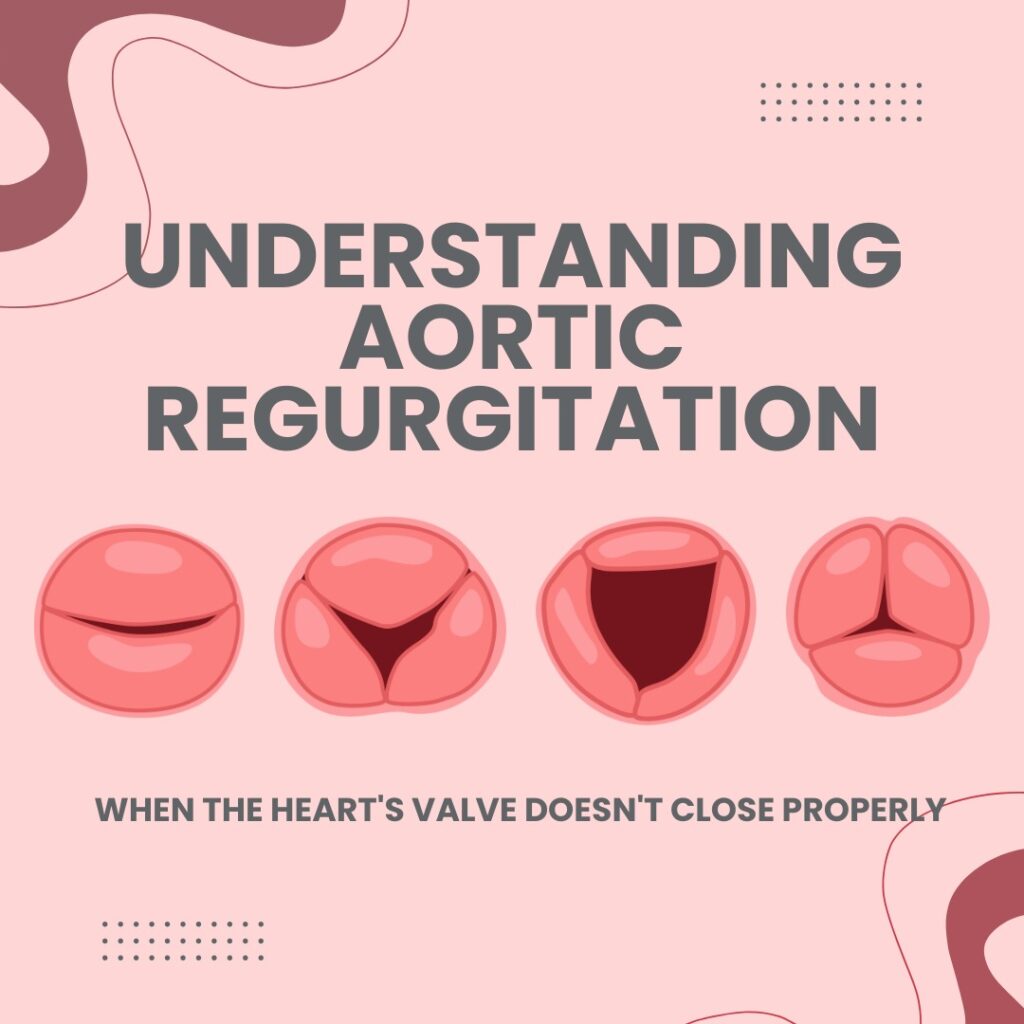
Aortic regurgitation, also known as aortic valve regurgitation or aortic valve insufficiency is a type of heart valve disease that occurs when the aortic valve does not close properly. This allows blood to leak backward into the heart instead of moving efficiently to the rest of the body.
Over time, this extra volume of blood forces the heart to work harder to maintain normal circulation. While the condition may develop gradually and remain symptom-free for years, severe cases can eventually lead to heart enlargement and heart failure if left untreated.
What Causes Aortic Regurgitation?
Aortic regurgitation can happen due to:
- Age-related, wear and tear of the valve
- High blood pressure
- A valve abnormality present from birth
- Heart valve infections
- Certain conditions that affect the aorta, the main blood vessel leaving the heart
What Are The Symptoms?
Many people with mild or moderate aortic regurgitation may not experience symptoms initially. However, as the condition progresses, symptoms may include:
- Shortness of breath, especially during activity or when lying flat
- Fatigue and reduced exercise tolerance
- Palpitations or awareness of a forceful heartbeat
- Chest discomfort
- Dizziness or fainting
- Swelling of the ankles or legs
Symptoms often develop gradually, making regular medical follow-up important for those diagnosed with the condition.
How Is Aortic Regurgitation Diagnosed?
Your doctor may hear a heart murmur during an examination and recommend an echocardiogram (heart ultrasound). This test allows doctors to see how well the valve is working and determine the severity of the leakage.
How Is It Treated?
Treatment depends on the severity of the leakage, symptoms and the impact on heart function.
- Regular Monitoring – Patients with mild disease may only require periodic follow-up and echocardiograms to monitor progression.
- Medications – Although medications cannot repair the leaking valve, they may help reduce symptoms or manage contributing conditions such as high blood pressure.
- Aortic Valve Surgery – When regurgitation becomes severe or begins affecting heart function, minimally invasive surgery may be recommended.
- Transcatheter Aortic Valve Implantation (TAVI) – This is the least invasive option. A new dedicated transcatheter valve is now available that can be introduced through a blood vessel in the thigh and implanted under X-ray guidance.
Early intervention before significant heart damage occurs often leads to better outcomes.
When Should You Seek Medical Attention?
You should consult a healthcare professional if you experience:
- Unexplained breathlessness
- Chest discomfort
- Palpitations
- Reduced exercise tolerance
- Episodes of dizziness or fainting
Individuals with known valve disease should attend regular follow-up appointments, even if they feel well.
The Importance of Early Detection
Aortic regurgitation can progress silently over many years. Regular cardiac evaluations can help identify the condition before symptoms develop. With timely diagnosis, careful monitoring, and appropriate treatment, most patients can continue to lead active and fulfilling lives.
If you have concerns about your heart health, speaking with a cardiologist can provide clarity and peace of mind.