

Did you know that heart attacks and cardiac arrests are not the same even though they are both serious heart-related emergencies? Understanding their differences can help in recognizing symptoms, seeking the right treatment, and taking preventive measures.
What is a Heart Attack?
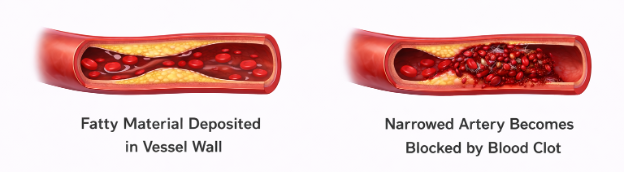
A heart attack or myocardial infarction occurs when blood flow supply to a part of the heart is suddenly stopped. This happens when a blood clot forms inside a significantly narrowed artery and cuts off the blood flow. This narrowing of the artery is due to build up of cholesterol called ‘plaque’. Once the artery is blocked by the blood clot, the hear muscle downstream from the blockage will die. This is a ‘heart attack’.
Symptoms of a Heart Attack:
- Chest pain or discomfort (like pressure over the chest, squeezing, or fullness)
- Pain radiating to the arms, back, neck, or jaw
- Shortness of breath
- Nausea or vomiting
- Cold sweat
- Lightheadedness or dizziness
A heart attack is a medical emergency, but the heart usually does not stop beating. Immediate medical treatment can prevent further damage and improve survival rates.
What is Cardiac Arrest?
Cardiac arrest occurs when the heart suddenly stops contracting in a coordinated manner due to an electrical malfunction. This leads to an immediate loss of blood flow to the brain and other vital organs. It will result in unconsciousness and, if untreated, death within minutes.
Symptoms of Cardiac Arrest:
- Sudden collapse
- Fits (convulsion)
- No breathing
- Loss of consciousness
Cardiac arrest is a life-threatening emergency that requires immediate CPR and defibrillation to restore the heart’s rhythm.
Key Differences: Heart Attack vs. Cardiac Arrest
| Feature | Heart Attack | Cardiac Arrest |
|---|---|---|
| Cause | Blocked blood flow to the heart | Electrical malfunction in the heart |
| Heart Stops Beating? | No | Yes |
| Main Symptoms | Chest pain, shortness of breath, nausea | Sudden collapse, no pulse, no breathing |
| Emergency Response | Call for medical help immediately | Perform CPR and use an AED until medical help arrives |
Can a Heart Attack Lead to Cardiac Arrest?
Yes, a severe heart attack can trigger a cardiac arrest if it disrupts the heart’s electrical system. However, not all heart attacks lead to cardiac arrest.
What to Do in an Emergency?
- For a heart attack: Call emergency services immediately and keep the person calm. If prescribed, they can take aspirin to help prevent further blood clotting.
- For cardiac arrest: Call emergency services, start CPR immediately, and use an automated external defibrillator (AED) if available. Early intervention can save lives.
Understanding these differences can help ensure quick action during emergencies, improving survival chances and outcomes.