
Ischaemic heart disease (IHD) is one of the leading causes of death in Singapore, accounting for approximately one-fifth of all deaths according to 2021 data. Yet it is also one of the most preventable serious conditions — if the warning signs are recognised early and appropriate action is taken.
This article explains what ischaemic heart disease is, what causes it, how it is diagnosed, and what treatment options are available. If you are concerned about your heart health or have risk factors for IHD, we encourage you to consult a cardiologist for a proper clinical evaluation.
Key Takeaways
- Ischaemic heart disease occurs when the coronary arteries — which supply blood and oxygen to the heart muscle — become narrowed or blocked, typically due to a build-up of atherosclerotic plaque.
- Warning signs include chest discomfort, pain that radiates to the jaw or left arm, shortness of breath, nausea, cold sweats, and unusual fatigue. Some individuals experience no symptoms at all until the disease is advanced.
- Key risk factors include high blood pressure, high cholesterol, diabetes, smoking, obesity, physical inactivity, and a family history of heart disease.
- IHD is a chronic condition that can be effectively managed — but not fully cured — through lifestyle modification, medication, and, where necessary, cardiac procedures such as coronary angioplasty or bypass surgery.
- Early detection significantly improves outcomes. Do not dismiss symptoms that could indicate reduced blood flow to the heart.
What Is Ischaemic Heart Disease?
Ischaemic heart disease — also referred to as coronary heart disease or coronary artery disease — is a condition in which the coronary arteries, which supply oxygenated blood to the heart muscle, become narrowed or blocked. This restricts blood flow to the heart, causing the muscle to receive insufficient oxygen.
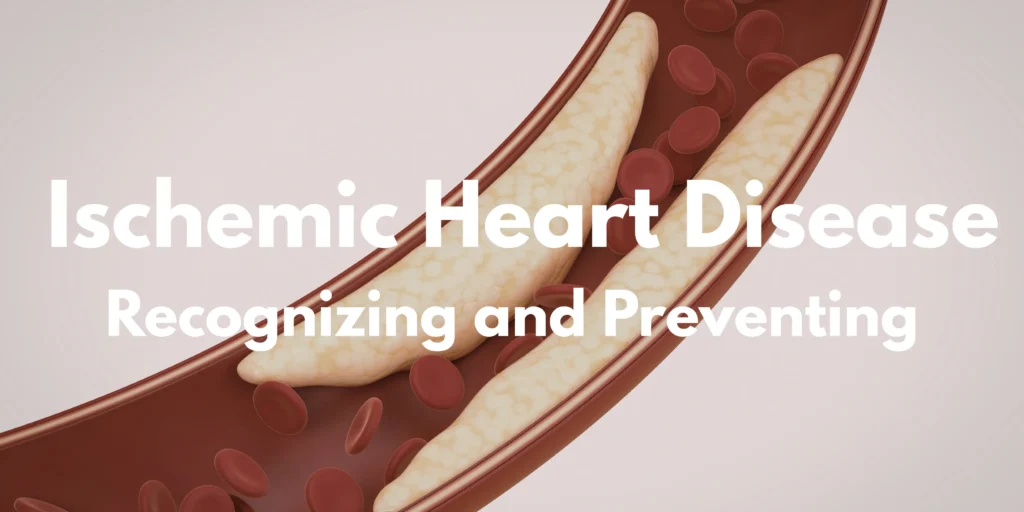
The most common underlying cause is atherosclerosis: a gradual build-up of fatty deposits (known as plaque) on the inner walls of the coronary arteries. Over time, this narrows the arteries, reducing their capacity to deliver blood. If a plaque ruptures, a blood clot can form suddenly, causing a complete blockage — this is what leads to a heart attack (myocardial infarction).
IHD exists on a spectrum. In its stable form (sometimes called chronic coronary syndrome), reduced blood flow causes predictable chest discomfort during physical exertion or stress. In its acute form — such as an unstable angina or heart attack — the obstruction is sudden and potentially life-threatening.
Ischaemic Heart Disease Symptoms: What to Look Out For
Symptoms of IHD can develop gradually or appear suddenly. Some individuals — particularly those with diabetes — may experience few or no symptoms until the disease is at an advanced stage, which is why awareness of risk factors and regular screening are important.
Common symptoms include:
- Chest pain or discomfort (angina): A feeling of tightness, pressure, squeezing, or heaviness in the chest. It may occur during physical activity, emotional stress, or at rest in more advanced cases.
- Pain radiating to the jaw, neck, back, or left arm: Discomfort from the heart can radiate outwards. Left arm and jaw pain in particular are classic warning signs that should never be ignored.
- Shortness of breath: Difficulty breathing during activity or at rest, as the heart struggles to pump adequately.
- Nausea or indigestion-like discomfort: Symptoms that mimic stomach problems — these are frequently misattributed to digestive issues, particularly in women.
- Cold sweats: Unexplained sweating, especially when combined with chest discomfort.
- Unusual fatigue: A persistent, disproportionate tiredness that is not explained by activity levels.
- Dizziness or light headedness: Reduced cardiac output can affect blood flow to the brain, causing faintness.
- Important: If you experience sudden, severe chest pain — particularly accompanied by pain in the left arm or jaw, sweating, and breathlessness — call emergency services immediately. This may indicate a heart attack requiring urgent medical intervention.
What Causes Ischaemic Heart Disease?
The primary cause of IHD is atherosclerosis — the progressive narrowing of the coronary arteries due to plaque accumulation. Plaque is composed of cholesterol, fat, calcium, and other substances that adhere to the inner arterial walls over time.
Several factors accelerate this process:
Non-Modifiable Risk Factors
These are factors that cannot be changed but are important to know:
- Age: The risk of IHD increases with age, particularly in men over 45 and women over 55.
- Sex: Men generally develop IHD at a younger age than women, though the risk for women rises significantly after the menopause.
- Family history: A first-degree relative (parent or sibling) who developed heart disease before the age of 55 (men) or 65 (women) is a significant independent risk factor.
Modifiable Risk Factors
These are factors that can be addressed through lifestyle changes and medical management — and doing so substantially reduces your risk:
- High blood pressure (hypertension): Sustained elevated blood pressure damages arterial walls, accelerating plaque build-up.
- High LDL-cholesterol (dyslipidaemia): Elevated levels of low-density lipoprotein (LDL) cholesterol are strongly associated with atherosclerosis.
- Diabetes mellitus: High blood glucose levels damage blood vessels and accelerate cardiovascular risk.
- Smoking: Tobacco use damages the inner lining of arteries, promotes plaque accumulation, and increases the risk of blood clot formation.
- Obesity: Excess body weight — particularly abdominal obesity — is associated with hypertension, dyslipidaemia, and insulin resistance.
- Physical inactivity: A sedentary lifestyle contributes to multiple cardiovascular risk factors.
- Unhealthy diet: A diet high in saturated fats, trans fats, salt, and refined sugars contributes to dyslipidaemia, hypertension, and obesity.
- Chronic psychological stress: Prolonged stress can raise blood pressure and contribute to unhealthy coping behaviours such as smoking and overeating.
How Is Ischaemic Heart Disease Diagnosed?
If you present with symptoms suggestive of IHD — or if you have several significant risk factors — a cardiologist will conduct a thorough clinical assessment. This typically begins with a detailed medical history, a review of lifestyle and risk factors, and a physical examination.
Depending on the clinical picture, one or more of the following investigations may be recommended:
- Electrocardiogram (ECG): A non-invasive recording of the heart’s electrical activity. An ECG can detect abnormal rhythms, evidence of a previous heart attack, or signs of reduced blood flow to the heart.
- Blood tests: Including a full lipid profile, blood glucose, and in acute presentations, cardiac biomarkers such as troponin to assess whether the heart muscle has been damaged.
- Chest X-ray: To evaluate the size and shape of the heart and identify any associated lung changes such as fluid accumulation.
- Stress test (exercise ECG): The heart is monitored under controlled physical exertion to assess how it responds to increased demand — this can reveal ischaemia not apparent at rest.
- Coronary angiography: An invasive imaging procedure using contrast dye and X-rays to directly visualise the coronary arteries and identify the location and severity of blockages. This is typically recommended when non-invasive tests suggest significant IHD.
- Additional investigations such as a CT coronary angiogram, echocardiogram, or cardiac MRI may also be recommended depending on clinical findings. The choice of investigations will always be guided by your cardiologist.
Ischaemic Heart Disease Treatment
The goal of IHD treatment is to improve blood flow to the heart, reduce the risk of a heart attack, manage symptoms, and address underlying risk factors. Treatment is always individualised — your cardiologist will recommend an approach based on the severity of your condition and your overall health.
- Lifestyle Modification
For all patients with IHD, lifestyle changes are a fundamental part of management, regardless of whether other treatments are also required. Evidence-based recommendations include:- Smoking cessation — this is the single most impactful lifestyle change a smoker can make.
- A heart-healthy diet: increased consumption of vegetables, fruits, fish, and unsaturated fats; reduced saturated fat, trans fat, salt, and refined sugars.
- Regular, moderate-intensity physical activity — as guided by your doctor.
- Achieving and maintaining a healthy body weight.
- Limiting alcohol consumption.
- Effective management of stress.
- Medications
Medical therapy is central to IHD management and is typically long-term. Depending on your specific condition, your cardiologist may prescribe medications from the following classes:- Antiplatelet agents (e.g. aspirin): to reduce the risk of blood clot formation in the coronary arteries.
- Statins: to lower LDL-cholesterol and stabilise arterial plaques.
- Beta-blockers or calcium channel blockers: to reduce the heart’s workload and control symptoms of angina.
- ACE inhibitors or angiotensin receptor blockers (ARBs): to protect the heart and blood vessels, particularly in patients with hypertension or reduced heart function.
- Nitrates: for the relief of acute angina episodes
- Note: Specific medications will be prescribed and reviewed by your cardiologist based on your individual clinical profile. Do not start, stop, or adjust cardiac medications without medical guidance.
- Coronary Angioplasty and Stent Placement (Percutaneous Coronary Intervention — PCI)
In patients with significant coronary artery narrowing, a minimally invasive procedure called percutaneous coronary intervention (PCI) may be recommended. A thin, flexible tube (catheter) is guided to the blocked artery, where a small balloon is inflated to widen it. A metal mesh tube called a stent is then typically placed to keep the artery open and maintain blood flow. - Coronary Artery Bypass Grafting (CABG)
For patients with more extensive coronary artery disease — such as multiple blocked arteries or blockages that are not suitable for PCI — coronary artery bypass surgery may be recommended. This procedure creates a new route for blood to travel around the blocked section of the artery, using a vessel taken from elsewhere in the body
Can Ischaemic Heart Disease Be Prevented?
IHD cannot always be prevented — particularly when genetic or age-related factors are involved. However, a substantial proportion of cases are attributable to modifiable risk factors, and the evidence strongly supports that addressing these significantly reduces the risk of developing IHD and experiencing a cardiac event.
Prevention involves:
- Knowing your numbers: blood pressure, cholesterol, blood sugar, and body mass index.
- Having regular health screening, particularly if you are over 40 or have known risk factors.
- Adopting and sustaining heart-healthy lifestyle habits.
- Engaging with your doctor early if symptoms arise — do not dismiss chest discomfort or unexplained breathlessness.
Concerned About Your Heart Health?
If you have risk factors for ischaemic heart disease, are experiencing symptoms that concern you, or simply want a clearer picture of your cardiovascular health, we encourage you to speak with a cardiologist. AHVC’s cardiology team is experienced in the assessment and management of coronary artery disease and can advise on the most appropriate evaluation for your individual circumstances.
FAQ
Is ischaemic heart disease curable?
IHD cannot currently be fully cured, as the structural changes in the coronary arteries are not entirely reversible. However, it can be effectively managed. With appropriate treatment — including lifestyle modification, medication, and where necessary, coronary procedures — many patients live full, active lives with well-controlled disease and significantly reduced risk of further cardiac events.
Can you live a long life with ischaemic heart disease?
Yes. Many people with IHD live long and active lives when the condition is diagnosed and managed appropriately. Adherence to prescribed medications, consistent lifestyle changes, and regular follow-up with a cardiologist are key to maintaining good long-term outcomes. Early detection makes a meaningful difference.
What should I avoid if I have ischaemic heart disease?
You should avoid smoking in any form, a diet high in saturated fats and salt, physical inactivity, excessive alcohol, and unmanaged stress. Equally important: do not ignore symptoms such as chest discomfort or breathlessness, and do not stop prescribed medications without consulting your cardiologist.
What is the difference between ischaemic heart disease and a heart attack?
Ischaemic heart disease is the underlying chronic condition — a narrowing of the coronary arteries that reduces blood flow to the heart over time. A heart attack (myocardial infarction) is an acute event that occurs when a coronary artery becomes suddenly and completely blocked, causing part of the heart muscle to be deprived of oxygen and begin to die. A heart attack is one of the serious complications that IHD can lead to if it is not managed.